If you have watched a thick ridge of ice build along the edge of your roof every February, you already know what an ice dam looks like. What most homeowners do not know is that it is not really a weather problem.
Ice dams on New Hampshire roofs are a heat problem, and the heat is coming from inside the house.
Here is the short version. Warm air escapes into the attic and warms the underside of the roof deck. That heat melts the snow sitting on top. The meltwater runs down the slope until it reaches the eaves, which stay cold because there is no heated space beneath them. It refreezes there, and the ridge of ice grows with every thaw.
Once that dam gets thick enough, water backs up behind it. Shingles are built to shed water running downhill. They are not built to hold standing water pushing uphill. It finds the seams, gets underneath, and shows up on your ceiling weeks later.
Fixing it means fixing the attic, not chipping the ice.
How an Ice Dam Actually Forms
It takes three things: snow on the roof, a roof surface above freezing, and an eave below freezing. Take away any one of them and you get no dam.
Snow acts like a blanket. It holds attic heat against the deck, which is why a roof can be melting under six inches of snow while the outside air sits at twenty degrees. The meltwater travels down and crosses the point where the heated space ends, usually right above the exterior wall.
Past that line, the deck is the same temperature as the air. The water freezes. Every warm day adds a little more, and by February there is a ridge several inches thick with a pond sitting behind it.
Why This Is an Attic Problem, Not a Roof Problem
New shingles will not stop an ice dam. Neither will a bigger gutter. If warm air keeps reaching the deck, the same cycle repeats on a brand new roof.
The heat gets up there three ways. Air leaks through gaps around light fixtures, bath fans, and the attic hatch. Insulation is too thin or compressed. Ventilation does not move cold air under the deck. Plenty of older New Hampshire homes have all three going at once.
Balanced ventilation is the part people skip. Intake at the soffits and exhaust at the ridge keeps the underside of the deck close to outdoor temperature. A cold deck does not melt snow, and snow that does not melt cannot refreeze at the eave.
The Damage You Do Not See Until Spring
The ceiling stain is the obvious one. The rest hides.
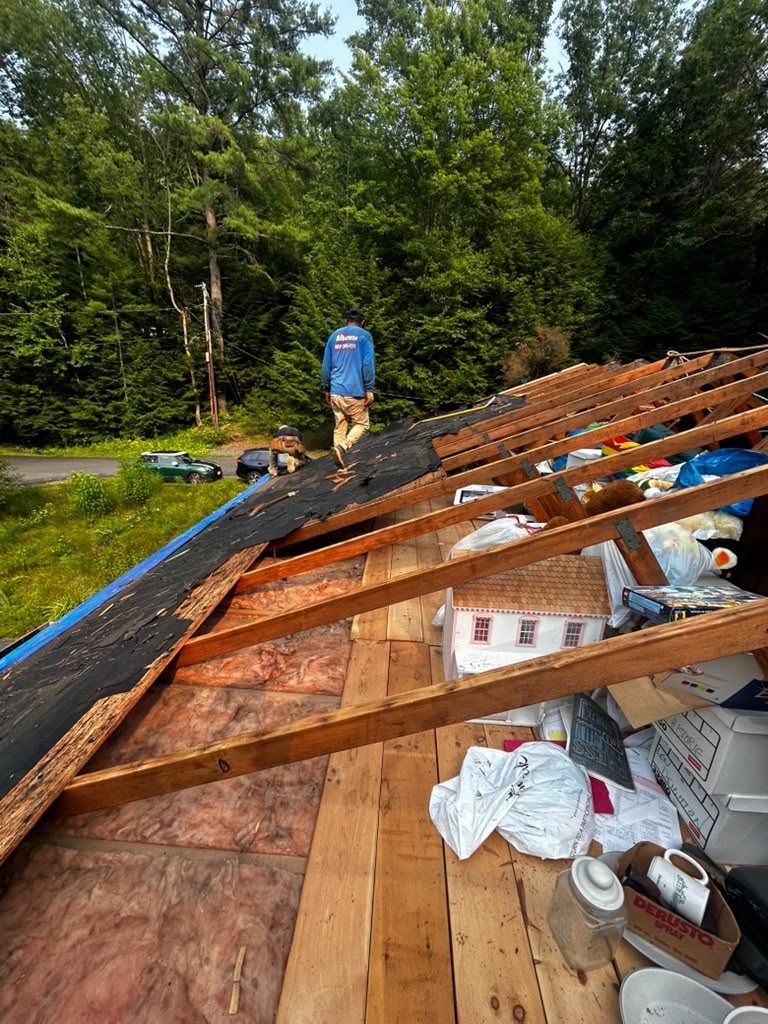
Water backing up under shingles soaks the underlayment and the decking. Plywood that stays wet through a winter delaminates, and you usually find out during a tear-off years later. It also runs down inside the wall cavity, where it wets insulation, stains drywall from behind, and feeds mold in a space nobody opens.
Outside, the weight of the ice bends gutters, pulls hangers out of the fascia, and cracks the fascia board. Falling ice takes out downspouts and dents siding below the eave. By the time any of it is visible, the winter that caused it is over.
What Actually Stops Ice Dams
Seal the air leaks first. Every gap between the living space and the attic is a heat source, and sealing them costs less than anything else on this list.
Then get the insulation depth right. Thin or compressed insulation lets heat straight through, no matter how good the ventilation is. After that, check the ventilation path. Blocked soffit vents are extremely common, usually because insulation got pushed into them years ago.
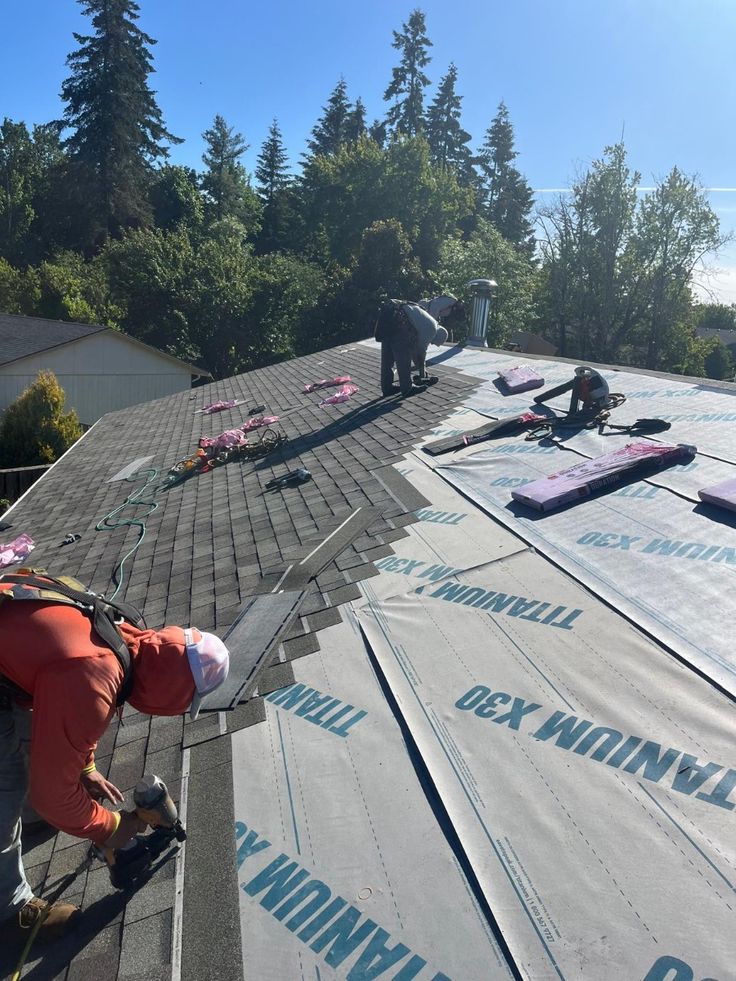
Roofing work matters too. Ice and water shield along the eaves and in the valleys will not prevent a dam, but it gives you a waterproof layer when one forms anyway. On a replacement in this climate, that membrane is not optional. Raking snow off the lower slope helps short term. It is a bandage, not a fix.