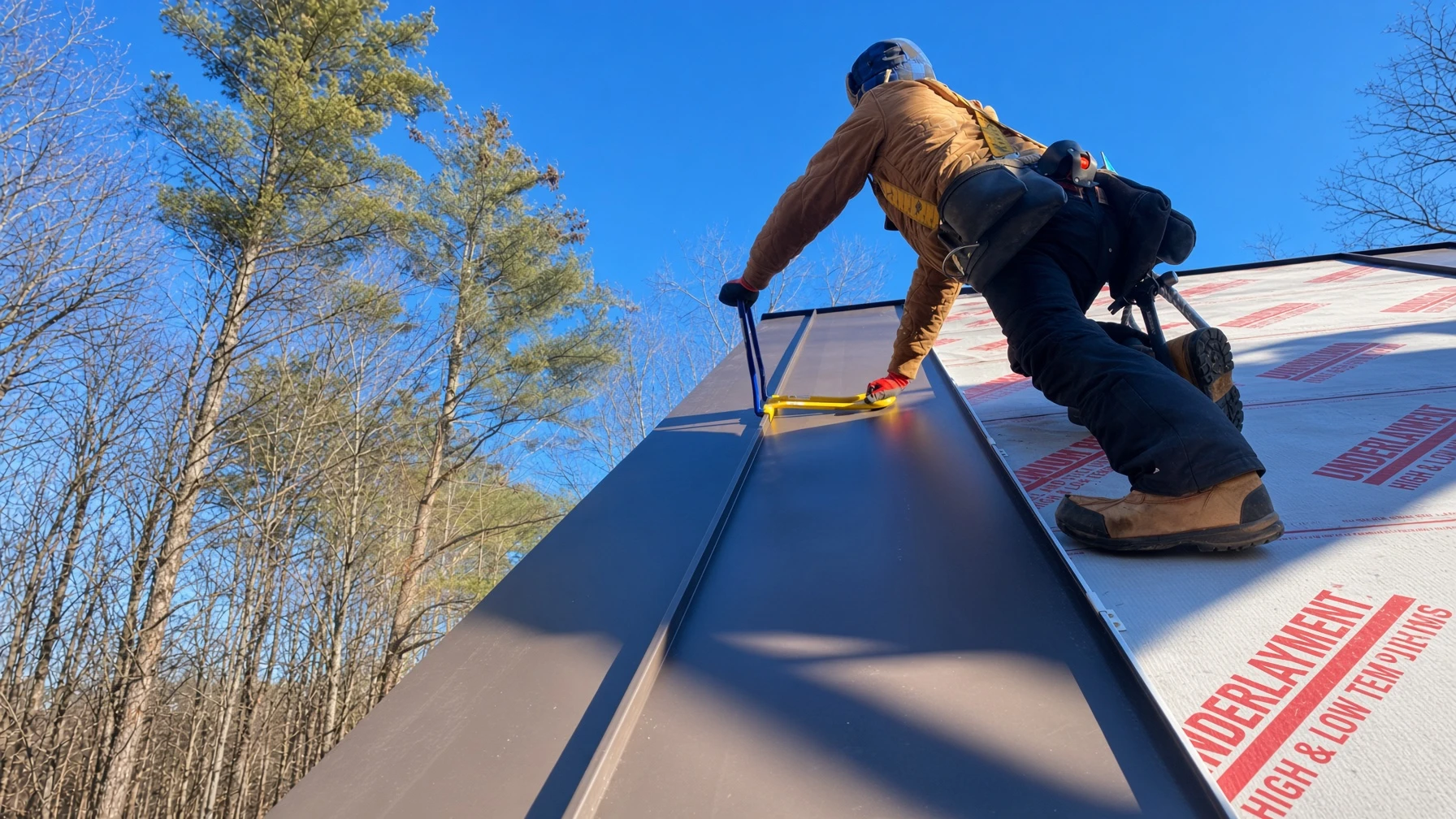
Our Roofing, Siding, and Gutter Services in New Hampshire
CDS Roofing Contractor Inc covers the full exterior of the house: the roof, the walls, and the drainage. Every service below is handled by our own crews, and every estimate is written before work begins.
Browse by category. Every service is handled by our own crews with a written estimate before work begins.
Roofing
Roof Replacement in New Hampshire
Roof replacement is the full tear-off and rebuild of a failing roof. It is the right call when shingles are curling, granules are gone, or repairs keep coming back. Most homeowners in New Hampshire reach this point between the twentieth and thirtieth year of an asphalt shingle roof.
Every layer comes off down to the decking. Rotten boards get replaced, new ice and water shield goes into the valleys and eaves, and the shingle system goes on with fresh flashing.
Roof repair covers targeted fixes on a roof that still has life left. Missing shingles after a windy week, a cracked vent boot, a lifted ridge cap, or flashing pulling away from a chimney are all repair work, not replacement work.
The inspection comes first. If a repair holds the roof for several more years, we say so and price the repair. If it does not, we explain exactly why and what replacement would cost.
Roof leak repair starts with finding the actual entry point, which is rarely directly above the stain on the ceiling. Water travels along rafters and decking before it drops. Chimneys, skylights, valleys, and vent penetrations cause most leaks on New Hampshire homes.
We trace the path back to the source, repair the failure correctly, and check the interior after the next rain. A patch of roof cement over a stain is not a repair.
Storm damage roof repair addresses what wind, hail, and falling limbs leave behind. Lifted shingles, creased tabs, dented gutters, and torn flashing often look minor from the driveway. The damage shows up months later as a leak over a bedroom ceiling.
After a storm we inspect every slope, not only the side facing the wind. You get a written list of what needs repair and what is only cosmetic, with photos of each item.
Roof installation covers new roofs on new construction, additions, garages, and outbuildings. There is no tear-off, so the work starts at the decking and builds up correctly from the first layer. Ventilation gets planned before the first bundle goes up.
Intake at the soffits and exhaust at the ridge keep the attic dry through a New Hampshire winter. A roof without balanced ventilation cooks shingles in summer and builds ice dams in January.
Shingle roofing is the standard on almost every home in New Hampshire, and for good reason. Architectural asphalt shingles handle freeze and thaw cycles, cost less than metal, and come in colors that match most siding. Warranties run long when the system is installed correctly.
We install architectural and three-tab asphalt shingles. The shingle itself is the visible part, but the underlayment, starter strip, and flashing decide whether the manufacturer warranty ever means anything at all.
A roof inspection is a documented look at the whole system: decking, flashing, ventilation, valleys, penetrations, and shingle wear. Homeowners order one before buying a house, after a storm, or when a roof reaches twenty years and the questions start.
You receive a written report with photos, the current condition of each area, and an honest estimate of remaining service life. No inspection ends with an automatic recommendation to replace.
Roof maintenance is service work on a roof that is doing its job. Debris gets cleared from valleys, exposed nails get sealed, loose shingles get fastened, and small failures get corrected while they still cost very little to fix. Most homes benefit from one visit a year.
Maintenance visits catch the things homeowners never see from the ground: a lifted ridge cap, a dried vent boot, or a valley packed with pine needles holding water against the shingles.
Preventive roof maintenance is scheduled work timed to the New Hampshire calendar. The fall visit clears debris and checks seals before snow arrives. The spring visit looks for what winter loosened, including ice dam damage along the eaves. Two visits a year keep small problems small.
Ice dams do most of the damage in this climate. They form when attic heat melts the snow, then refreezes at the eaves and forces water back under the shingles.
Siding replacement removes failed siding down to the sheathing and rebuilds the exterior wall system. Warped panels, soft spots, insect damage, and paint that will not hold are the usual reasons. Replacement is also the moment to correct whatever is happening behind the wall.
Old siding comes off, the sheathing gets inspected for rot, and a proper moisture barrier goes on before the new panels. Skipping the barrier is how a new wall fails in five years.
Siding repair handles sections rather than whole walls. Loose panels, cracked boards, gaps at the corners, and separated trim let water in one drop at a time. Fixing a small section early keeps a full siding replacement several years away.
Color matching is the hard part on an older wall, because panels fade in the sun. We source the closest available match and place repairs where the transition is least visible.
Damaged siding repair covers impact damage: a limb through a panel, hail cracks, a ladder gouge, or rot spreading from a leaking gutter above. The visible panel is the smaller half of the problem. The wall behind it decides the scope.
We open the damaged area, check the sheathing and framing for moisture, and repair what we find before closing the wall. A panel installed over wet sheathing traps the problem inside.
Siding installation is new work on new construction, additions, dormers, and garages. The wall goes up in the right order: sheathing, house wrap, flashing at every opening, then panels. Getting that order right is what keeps the wall dry for decades.
Window and door openings are where most siding jobs fail. Head flashing, sill pans, and correct laps matter more than the panel brand on the box. We handle those details before the first panel goes on.
Exterior siding installation covers the whole envelope, not only the flat walls. Soffit, fascia, corner posts, window trim, and gable ends all get replaced together so the finished exterior reads as one job instead of three different repairs. Color and profile stay consistent.
Full exterior work is also the practical time to handle the roof edge and the gutters, since the crew is already on the walls with staging already up around the house.
Siding maintenance keeps an exterior wall from aging faster than it should. Caulking dries out, seams open, mildew builds on the north side, and small gaps appear where the trim meets the panels. All of it is cheap to correct on schedule.
A maintenance visit includes a full walk around the perimeter, sealant renewal at the openings, and a check of the wall sections that sit directly under gutters, valleys, and rooflines.
Gutter installation puts a drainage system on a house that never had one, or replaces an undersized system that overflows every storm. Correct sizing matters here, because a New Hampshire roof sheds snowmelt and heavy spring rain into the same channel.
Pitch, hanger spacing, and downspout placement decide whether the system works. Gutters that look level to the eye are usually pitched wrong and hold standing water at the far end.
Gutter repair fixes the system you already have. Sagging sections, leaking seams, pulled spikes, separated miters at the corners, and downspouts that came loose in a storm are all repairable without replacing the entire run. Most repairs take a single visit.
We check the fascia board behind the gutter first. A gutter pulling away is often a symptom of rotted fascia, and rehanging it on soft wood only buys a few months.
Gutter replacement makes sense when the run is bent, rusted, undersized, or held together by repeated patching. Ice loads in this climate bend aluminum over time. A gutter pulled off the fascia twice will usually not hold a third time.
The replacement is the moment to correct sizing and downspout count. Adding one more downspout on a long run often solves an overflow problem that no amount of resealing ever fixed.
Gutter maintenance is the cleaning and inspection that keeps everything else working. Pine needles, maple seeds, and shingle granules pack the low end of a run and turn it into a planter. Full gutters overflow onto the siding and freeze at the eaves.
Two cleanings a year fit this climate: one after the leaves drop and one after spring runoff. Each visit includes a flush test and a check of the hangers and seams.
Downspout installation moves collected water away from the house instead of dumping it at the corner of the foundation. Long gutter runs need more than one outlet, and basements stay dry when the discharge point sits far enough from the wall.
Placement matters as much as the pipe. We look at grade, walkways, and driveways before setting outlets, because water discharged onto a slab freezes into an ice sheet by December.
Downspout replacement handles pipe that is crushed, disconnected, undersized, or feeding water straight against the siding. Damage usually comes from ladders, snow sliding off a roof, or a plow catching the lower section during the winter. Replacement is quick work on most homes.
A crushed downspout backs water up the entire run. The symptom often shows at the gutter, not at the pipe. We replace the section and correct whatever caused the damage.
Answers to the questions we hear most often from New Hampshire homeowners.
Do you charge for estimates?
No. Estimates are free and there is no obligation. We come out, look at the roof or the wall, measure what needs measuring, and put the scope and the price in writing so you can compare it against anyone else.
How soon can you start?
It depends on the season and the size of the job. Small repairs usually move fast. Full replacements get scheduled around weather and material lead times, and we will give you a realistic window when we hand you the estimate.
Do you handle roofing and siding on the same project?
Yes, and it is usually the smarter way to do it. If staging is already up for the roof, the walls and the gutters cost less to address at the same time than they will as three separate jobs later.
Are your crews insured?
Yes. Insurance is in place before anyone steps onto your property. If you want documentation for your own records, just ask and we will provide it with the estimate.
What areas do you cover?
We work in New Hampshire. If you are not sure whether your town is in range, call and we will tell you straight, instead of driving out and finding out it does not work.
Should I repair my roof or replace it?
One bad valley, a few missing shingles, or a leaking vent boot is a repair. Curling shingles along the whole slope, bare spots where the granules are gone, and leaks in more than one place point to replacement. An inspection tells you which one you are dealing with.
How long does a roof replacement take?
Most homes are done in one to three days, depending on size, pitch, and weather. Tear-off and dry-in normally happen on the same day, so the house is never left open overnight.
Can you match my existing siding color?
Usually, but an exact match is rare on an older wall because panels fade in the sun. We find the closest available profile and color, and we place the repair where the transition is hardest to see.
How do I know if siding damage reached the wall?
You often cannot tell from outside, which is the problem. Soft spots, a musty smell inside, or staining below a panel are signs. We open the section and check the sheathing before putting anything back.
How often should gutters be cleaned in New Hampshire?
Twice a year for most homes: once after the leaves come down and once after spring runoff. If you have pines over the roof, you will need it more often, because needles pack the low end of the run.
Why do my gutters overflow even after cleaning?
Usually pitch or capacity. A gutter that looks level is often pitched wrong and holds water at the far end. On long runs, one downspout is not enough to move what a New Hampshire roof sheds in a heavy rain.